
ADVERTISER DISCLOSURE: The Frugal Tourist is part of an affiliate sales network and receives compensation for sending traffic to partner sites, such as MileValue.com. This compensation may impact how and where links appear on this site. This site does not include all financial companies or all available financial offers. Terms apply to American Express benefits and offers. Enrollment may be required for select American Express benefits and offers. Visit americanexpress.com to learn more. All information about the American Express Schwab Platinum has been collected independently by The Frugal Tourist.
EDITORIAL DISCLOSURE: Opinions, reviews, analyses & recommendations are the author’s alone and have not been reviewed, endorsed, or approved by any of these entities.
Hey everyone! If you’ve been following my journey lately, you know things look a little different these days.
After undergoing heart surgery for an aortic aneurysm, my focus has shifted from just merely snagging the best flight deals to something even more valuable: my health.
Cardiac rehabilitation has taught me that walking isn’t just a way to get from Point A to Point B.
Walking is a lifeline. It’s nature’s best medicine for longevity.
So now, I’m trading the Uber/Lyft rides for sneakers.
If you have an extra day in New York City, you have to explore the Chelsea & Meatpacking Districts and West Village.
It is hands down one of the most scenic, vibrant, and pedestrian-friendly stretches in the Big Apple.
This is also Part 4 of my “Walk Your Way to Health” series in NYC.
This 3-mile route (about 1 hour and 10 minutes of walking time) takes us from the futuristic Vessel to the historic Washington Square Park.
It’s the perfect way to get your steps in, see the sights, and celebrate being active!

Why This Walk is Highly Recommended
The 3-mile route offers a perfect blend of exercise and exploration, allowing you to experience architectural wonders like the High Line and Little Island alongside the cultural charm of the West Village.
It serves as an ideal itinerary for those looking to combine sightseeing with health goals, allowing you to “get your steps in” while exploring iconic neighborhoods without spending a fortune.
Ultimately, this walk provides a unique balance of modern attractions and classic New York history, including stops at the Stonewall National Monument and famous TV filming locations.
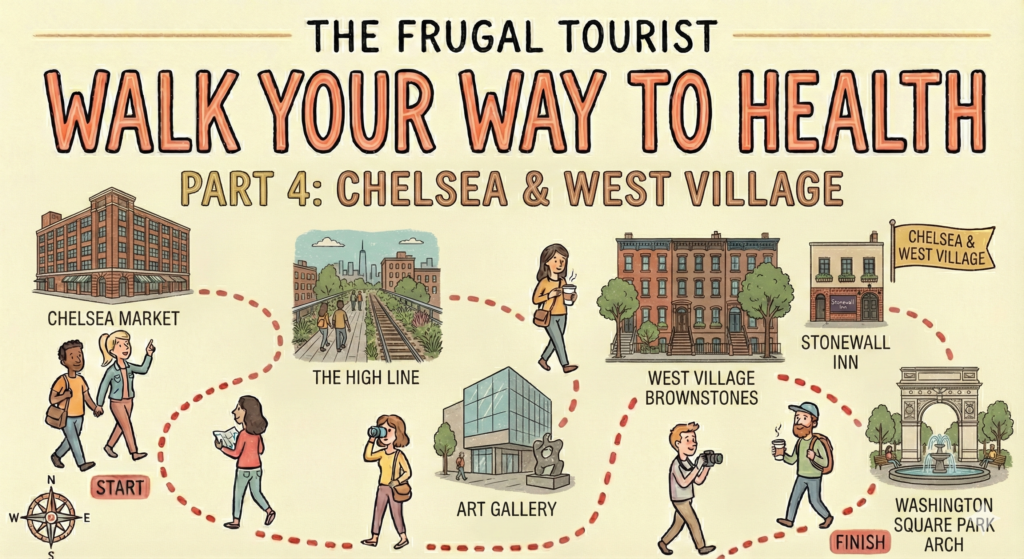
| NYC Walking Tour Part 4 (Chelsea & West Village) Stats |
|---|
| Total Distance: |
| Approx. 3 miles |
| Estimated Time: |
| 2 – 3 hours (Allow time for exploring different restaurants) |
| Step Count Goal: |
| ~4,500 steps |
Where I Stayed: Smart Luxury at The Standard
Before we lace up our shoes, let’s talk points!
Being “The Frugal Tourist” means I love luxury, but I hate paying full price for it.
I set up base camp at The Standard, High Line in the Chelsea District.
Typically, a hotel this trendy and centrally located costs a fortune.
However, I booked a night here using World of Hyatt points.
It put me right in the middle of the action without hurting my wallet, proving once again that credit card points are the best travel companion.
If you need tips on how to leverage credit card points for nearly free travel, feel free to join us in our free Travel Miles and Points Facebook Group community.
Join Our Free Travel Miles & Points Facebook Group
Map: New York City Walking Tour Part 4: Chelsea & West Village
Feel free to share or download the map for this NYC walking tour
Restrooms: Where to Go When You Gotta Go
Hydration is key, but so is knowing where to find a bathroom!
Here are the clean, accessible, and free restrooms along this specific route so you never have to panic.
- Hudson Yards: The easiest option is inside The Shops & Restaurants at Hudson Yards (the luxury mall right next to The Vessel). You can find clean restrooms on multiple levels.
- The High Line: There are bathrooms located directly on the park path at 30th Street (near where we start), 16th Street, and Gansevoort Street (the southern end).
- Chelsea Market: Head to the Lower Level (downstairs). It can get crowded, but it is reliable. Look for the elevators or stairs near the middle of the market.
- Little Island: There are public restrooms located near The Glade (the smaller lawn) just past the South Bridge entrance. They are typically very clean and modern.
The Whitney Museum: Admission to the lobby is free, and there are restrooms on the Ground Floor. This is a great “secret” stop before hitting the West Village streets.- Washington Square Park: There is a public restroom building known as the “Comfort Station” located near the southwest corner of the park (along West 4th Street).
New York City Walking Tour Part 4: Chelsea & West Village
1. Hudson Yards / The Vessel
We kick things off at Hudson Yards, a neighborhood that feels like a city within a city.
It’s hard to believe, but until recently, this area was just a massive, open-air storage pit for Long Island Rail Road trains called the West Side Yard.
The skyscrapers you see today were built on a giant platform constructed over the active tracks, a feat of engineering that officially opened to the public in March 2019.
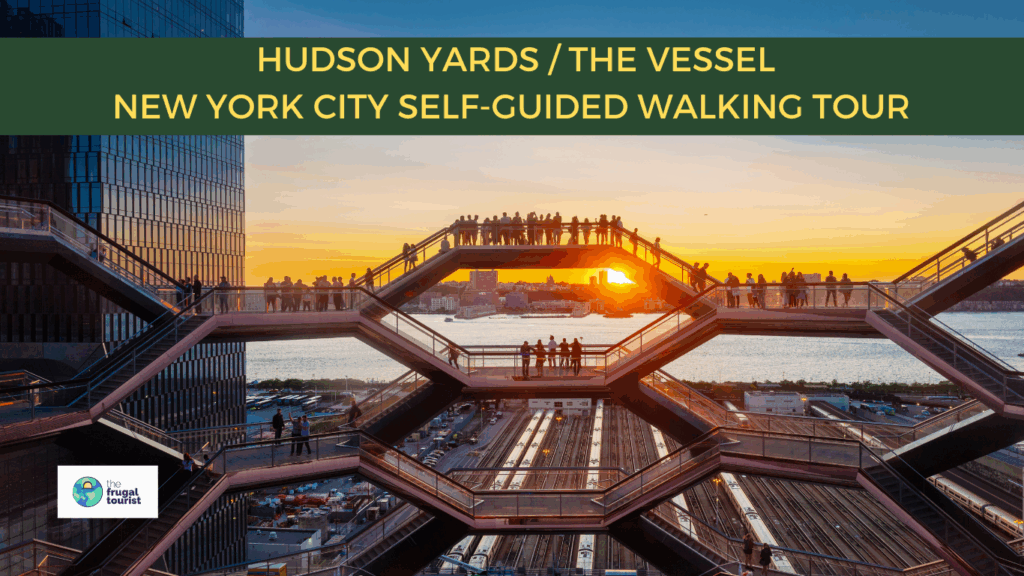
The visual anchor of the neighborhood is “The Vessel,” designed by British architect Thomas Heatherwick.
Modeled after ancient Indian stepwells, this copper-clad structure is a honeycomb of 154 flights of stairs and 2,500 steps.
It was built to be climbed, though access is now regulated by new safety protocols (see update below).
Even from the bottom, it’s a stunning piece of interactive art.
- Insider Tip: If the stairs are closed or tickets are sold out, don’t worry. The most Instagram-worthy shot is actually from the very center of the base looking straight up at the sky—it looks like a sci-fi kaleidoscope!
| Important Update: The Vessel Reopens |
|---|
| After a long closure, The Vessel officially reopened in late 2024 with significant new safety measures. New Look: The structure is now fitted with floor-to-ceiling steel mesh on every level. While it changes the aesthetic slightly, it allows visitors to safely climb the structure again. Restricted Areas: The very top level remains permanently closed as safety mesh could not be installed there. Tickets Required: Unlike its original opening, entry is no longer free for everyone. General admission tickets start at $10. Frugal Tip: Admission is still free for NYC residents on Thursdays! You must reserve a ticket online in advance and show proof of residency upon arrival. |
Worth the Detour: The Edge
For the thrill-seekers, check out The Edge at 30 Hudson Yards. As the highest outdoor sky deck in the Western Hemisphere, it offers a modern and thrilling experience with breathtaking 360-degree views of the NYC skyline and New Jersey. The unique outdoor deck even features a glass floor that lets you look 100 stories straight down!
- Heads Up: Online reviews rave about the views, but some visitors note the high cost and potential for crowds and long waits, especially during peak times like sunset. To avoid the crush, consider visiting early in the morning or booking a ticket for a less popular time slot.
- Kris’s Travel Tip: I found the perfect way to maximize the value here. I booked my ticket for about 1.5 hours before sunset and stayed until well after dark. This strategy allowed me to experience the skyline in three completely different ways: clear daylight, the stunning golden hour, and finally, the magical twinkling city lights at night. It made the ticket price feel absolutely worth it.
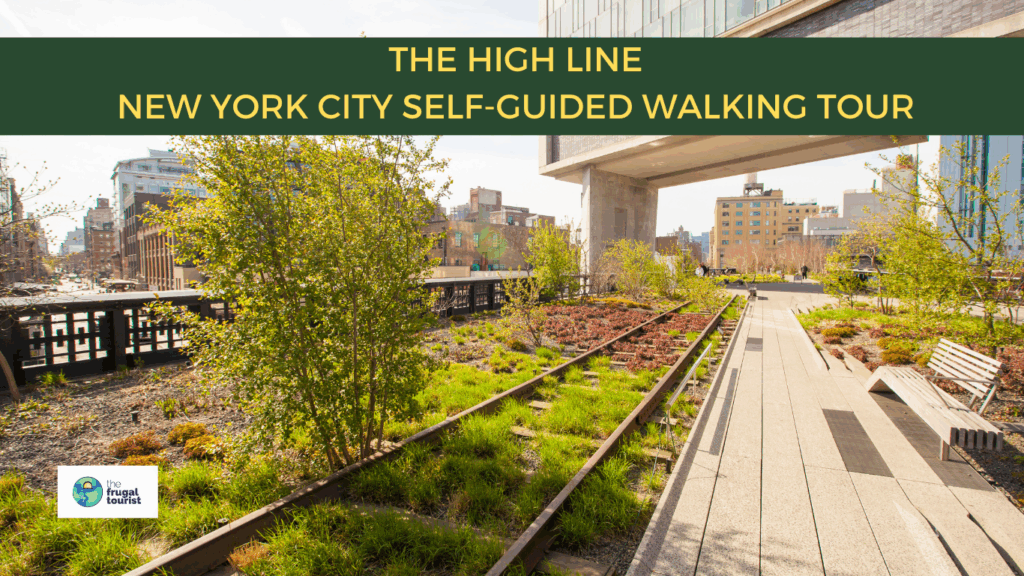
2. The High Line
From Hudson Yards, hop directly onto the High Line.
This 1.45-mile-long linear park is a miracle of urban preservation.
Before it was a park, this was an active elevated freight rail line built in 1934.
The History:
Before the train tracks were elevated, freight trains ran at street level along 10th Avenue.
It was so dangerous for pedestrians that the street was nicknamed “Death Avenue.”
The railroad actually hired men on horses, known as “West Side Cowboys,” to ride in front of the trains waving red flags to warn people!
The elevated tracks operated until 1980 (the last cargo was a trainload of frozen turkeys).
It sat abandoned and overgrown with weeds until two locals, Joshua David and Robert Hammond, founded “Friends of the High Line” to save it from demolition.
It opened as a park in 2009.
The Walk & Highlights:
As you walk south, you are floating 30 feet above the city streets.
- Architecture: Look for the Zaha Hadid Building (520 West 28th St) with its futuristic, curvy metal exterior, and the IAC Building by Frank Gehry, which looks like a ship’s sails blowing in the wind.
- Viewpoints: Don’t miss the 10th Avenue Square and Overlook (at 17th St), where steps descend to a glass window that lets you watch the traffic below like a movie screen. There’s also the 26th Street Viewing Spur, a frame that encourages you to look out at the city grid.
- Art: The park features a rotating program of world-class sculptures and murals. You might see anything from hyper-realistic statues to abstract installations, so keep your eyes peeled—the art changes every season!
- The Standard Hotel: This mid-century modern-inspired hotel bridges over the High Line itself. It’s a great photo op, especially looking up at its concrete pillars and glass façade.
- Insider Tip: Try to start this walk early (around 9:00 AM) to beat the crowds. The path is narrow, and it gets packed by midday!
3. Chelsea Market
About midway down the High Line (after the 10th Avenue Overlook and free restrooms), take the stairs down at 15th or 16th Street to hit Chelsea Market.
It’s hard to imagine now, but this massive food hall used to be a factory complex for the National Biscuit Company (Nabisco).

The History:
Built in the 1890s, this complex occupied an entire city block and was the birthplace of the Oreo cookie (invented here in 1912!) and the Saltine cracker.
The factory utilized the High Line trains to ship raw ingredients like flour and sugar directly into the building—you can still see the old train rails running through the concourse today.
Nabisco moved out in the 1950s, and the building fell into disrepair until the 1990s when developer Irwin Cohen envisioned a new kind of indoor urban food court.
It opened in 1997 and transformed the neighborhood.
- Insider Tip: This is the perfect “pit stop.” Use the restrooms here and grab a quick snack at Los Tacos No. 1—arguably the best tacos in the city.
Worth the Detour: Pier 57 Rooftop Park (The “Anti-Crowd” View)
- Where: After Chelsea Market, head down towards the Hudson River.
- The Detour: Just north of Little Island sits the massive Pier 57 building. Most tourists ignore it, but you should head inside and take the elevator to the Rooftop Park.
- Why it’s worth it: It is completely free, usually empty, and offers a panoramic lawn that feels like a secret sky deck. Plus, the food hall (Market 57) is curated by the James Beard Foundation, so the dining options are top-tier. Best of all, it gives you the perfect vantage point to look down on Little Island and capture a photo of the floating park without fighting the crowds.
4. Little Island
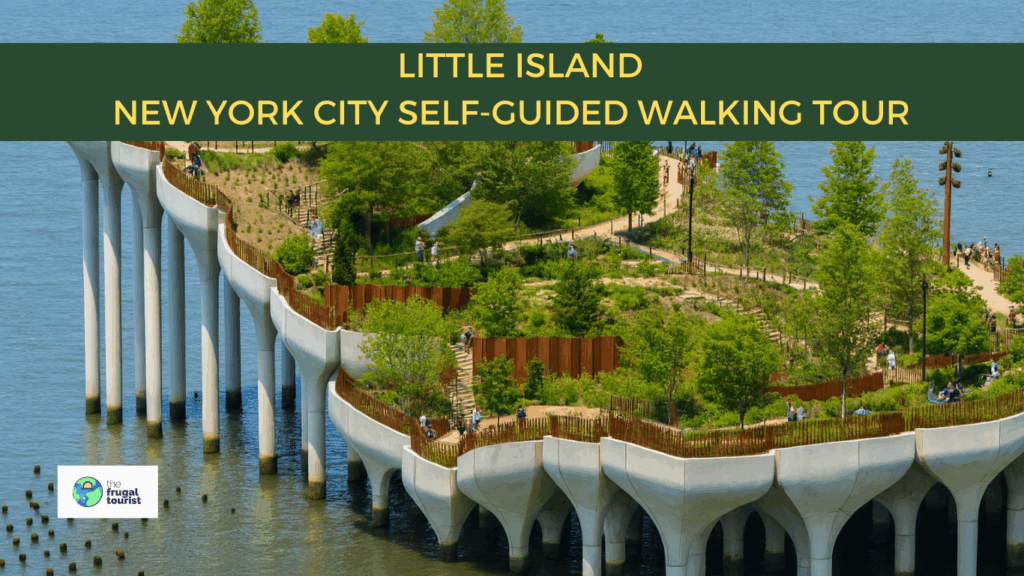
Next to Pier 57 is the stunning Little Island.
Sunset Tip: Little Island offers one of the best sunset vantage points in New York City. If your travel schedule allows, consider skipping this stop for now and circling back at the end of your walking tour.
The Backstory:
Rising from the remnants of Pier 54 (where Titanic survivors once disembarked), this floating park is a gift to the city from billionaire Barry Diller and fashion designer Diane von Furstenberg.
Designed by Thomas Heatherwick (the same mind behind The Vessel), the park rests on 132 tulip-shaped concrete pot structures that create an undulating landscape hovering over the Hudson River.
Highlights:
- The Amph: A stunning 687-seat amphitheater facing the water—the sunset views during a performance here are legendary.
- The Glade: A smaller, intimate lawn perfect for relaxing or catching smaller cultural events.
- The Overlooks: Winding paths lead to three overlooks offering panoramic views of Manhattan, the river, and New Jersey.
Logistics:
- Website: littleisland.org
- Hours: Generally open daily from 6:00 AM to 11:00 PM (hours may vary by season; check the website).
- Admission: Entrance is free! (Though some performances in The Amph may require tickets).
Quick Stop: Gansevoort Peninsula (Manhattan’s First Public Beach)
- Where: Just south of Little Island, right before you reach the Whitney Museum.
- The Highlights: Opened in late 2023, this is Manhattan’s first-ever public beach (for sunbathing, not swimming!). It offers sandy shores, lounge chairs, and a salt marsh right on the Hudson River.
- Look Out For: The massive, ghost-like steel frame in the water is a sculpture called “Day’s End” by David Hammons. It outlines the exact shape and size of the original Pier 52 shed that used to stand there, serving as a ghostly monument to the city’s industrial past.
5. The Whitney Museum of American Art
Once you’ve admired the art in the river, turn around to see the masterpiece on land.
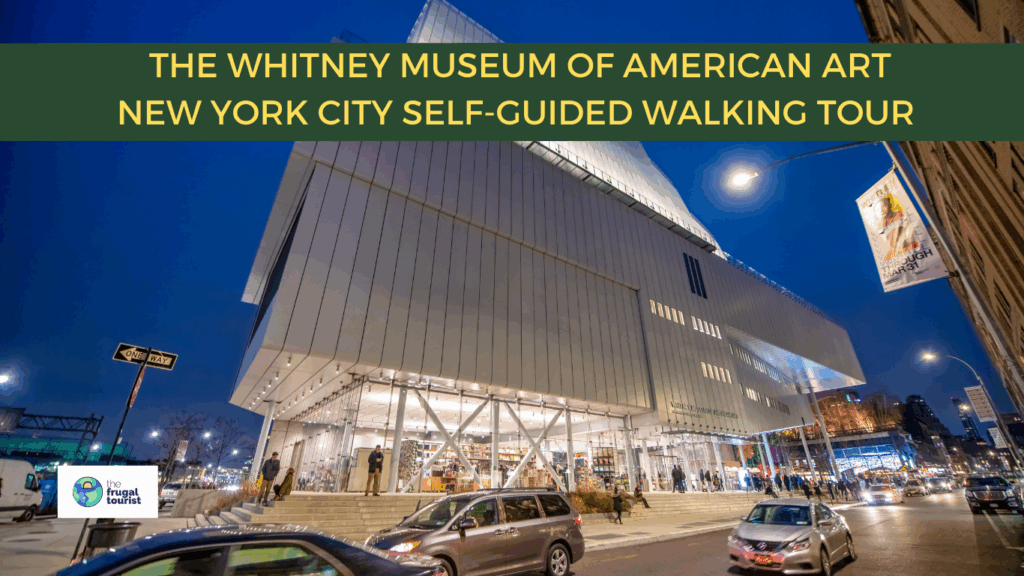
Standing guard at the southern tip of the High Line is the Whitney Museum of American Art.
It serves as the cultural anchor of the Meatpacking District, marking the perfect transition from the sleek, elevated park to the historic cobblestones of the West Village.
Even if you don’t purchase a ticket to see the galleries, the building itself is a masterpiece of industrial design worth admiring from the street.
It’s free to enter the lobby, which also has the museum gift shop and restaurant.
- Insider Tip: If you do go in, head straight to the outdoor terraces. The views connecting the Empire State Building to the World Trade Center are unmatched.
- Budget Hack (Free Admission): You can visit for free on Friday nights (5–10 PM) and the second Sunday of every month! Plus, admission is always free for anyone 25 and under.
Must-See Art:
If you decide to explore the galleries, keep an eye out for these iconic pieces:
- Edward Hopper’s “Early Sunday Morning”: The Whitney holds the most extensive collection of Hopper’s work, and this 1930 masterpiece of 7th Avenue storefronts is quintessential NYC.
- Alexander Calder’s “Calder’s Circus”: A magical miniature circus created by the artist from wire, wood, and cloth between 1926 and 1931.
- George Bellows’ “Dempsey and Firpo”: A dynamic, powerful painting capturing the famous 1923 boxing match.
Worth the Detour: Magnolia Bakery (The Original)
- Where: 401 Bleecker St, New York, NY 10014 (Located at the corner of Bleecker St and W 11th St)
- Directions: From the Whitney Museum, walk east on Gansevoort Street for two blocks until you reach Greenwich Street. Turn right (south) onto Greenwich Street and walk down to West 11th Street. Turn left (east) onto West 11th Street and continue until you hit Bleecker Street.
- The Detour: You will usually see the line before you see the sign!
- Why it’s worth it: This is the original location that started the worldwide cupcake craze after being featured in Sex and the City. While the cupcakes are iconic, the real star here is the Banana Pudding. It is world-famous for a reason—creamy, fluffy, and loaded with vanilla wafers.
- Insider Tip: The bakery itself is tiny with no indoor seating. Do what the locals do: grab your banana pudding and walk slightly across the street to Bleecker Playground to sit on a bench and enjoy it while people-watching.
6. The West Village: 66 Perry Street
From Magnolia Bakery, head south on Bleecker Street for just one block.
Turn left onto Perry Street.
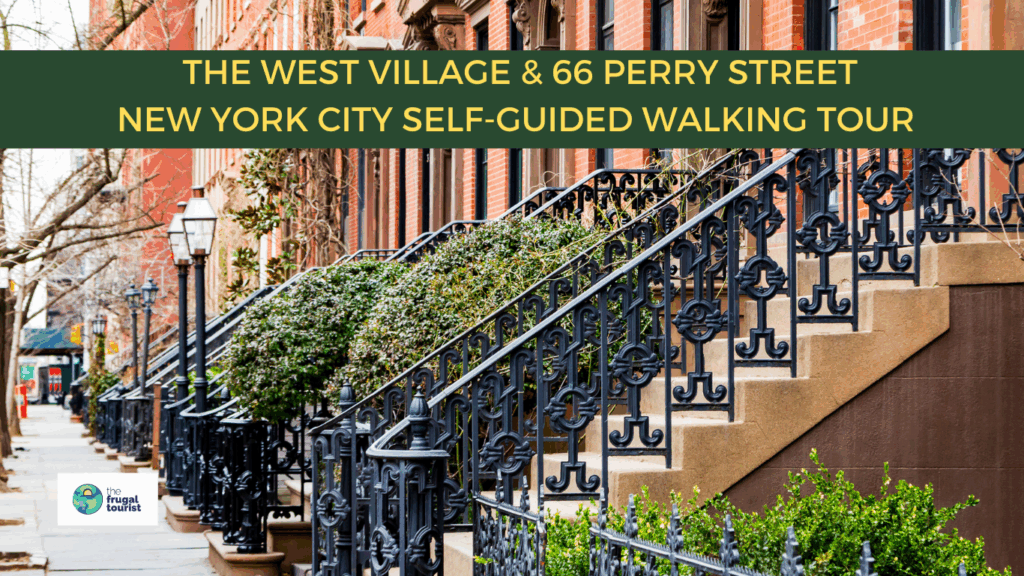
You are now in the heart of the West Village, an iconic enclave known for its brownstones, cobblestones, and tree-lined charm.
Our specific destination is 66 Perry Street, famous as the exterior used for Carrie Bradshaw’s apartment in Sex and the City.
Why is the West Village so Famous?
The West Village has arguably the most charming and rebellious soul in all of Manhattan.
- Bohemian Roots: In the early 20th century, this area became “Little Bohemia,” a haven for artists, writers, and free thinkers who couldn’t afford the rents elsewhere. Icons like Bob Dylan, Jack Kerouac, and James Baldwin all called these winding streets home, crafting works that defined American culture.
- LGBTQ+ History: It is the cradle of the modern gay rights movement, centered around the Stonewall Inn (our upcoming stop!). The neighborhood has long been a safe haven and a center of activism.
- Architecture & Layout: Unlike the rigid grid of uptown Manhattan, the streets here are delightfully chaotic (originally cow paths!), confusing even lifelong New Yorkers. The low-rise, 19th-century brownstones and the lack of towering skyscrapers give it a European, village-like feel that is rare in NYC.
- 66 Perry Insider Tip: Please be respectful! Real people live here. Take your selfie from the sidewalk, but don’t sit on the stoop (there is usually a chain across it for this reason).
7. The West Village: 90 Bedford Street (The “Friends” Building)
From 66 Perry Street, walk back to Bleecker Street and turn right (south).
Walk about four blocks down Bleecker Street, then turn right onto Grove Street.
Walk one block to the corner of Grove and Bedford, and look up.
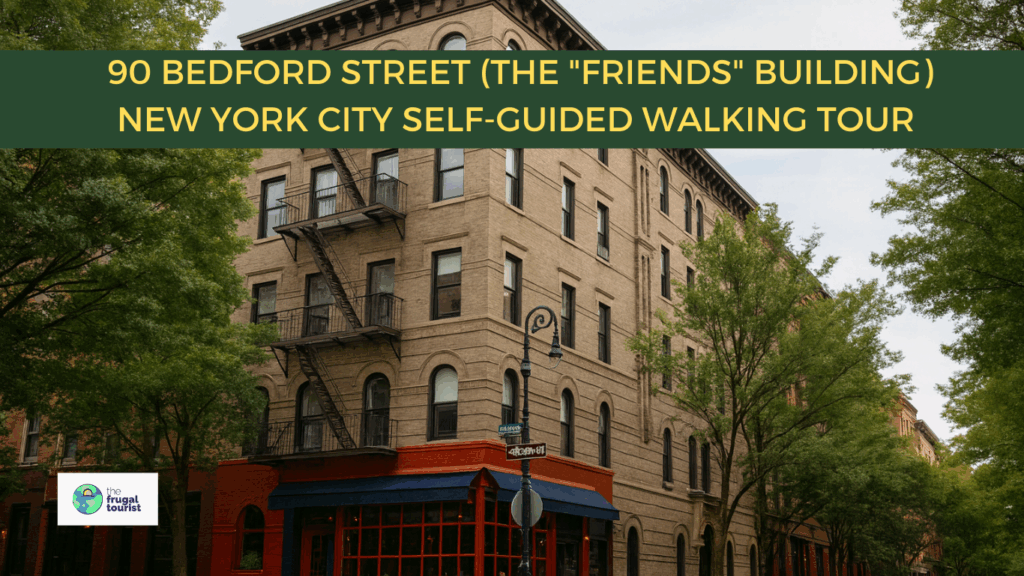
You’ll recognize the tan brick building used in the transition shots for Friends.
Even though the cast never filmed here, the building has become a mini pilgrimage spot for fans around the world.
The Real Story:
Built in 1899, this is a classic New York “dumbbell tenement.”
These buildings were designed with narrow airshafts in the middle (hence the dumbbell shape), supposedly to bring in more light and air for residents.
Today, the building is fully renovated and sits in one of the West Village’s most desirable corners.
A Fun Detail Most Fans Miss
If you look closely above the ground-floor restaurant, you’ll notice the iconic Friends fire escape.
This wasn’t featured as much in the show, but it adds to the building’s authentic NYC charm.
It’s one of the most photographed residential corners in Manhattan!
The Little Owl:
The ground floor isn’t “Central Perk”—it’s actually a beloved Mediterranean restaurant called The Little Owl.
It opened in 2006 and is famous for its meatball sliders and pork chops.
It’s a tiny spot (only about 30 seats), so if you want to eat where “Friends” lived, book a reservation weeks in advance!
- Insider Tip: The vibe here is quintessential West Village. It’s a great intersection to just stand and people-watch for a few minutes.
Worth the Detour: Grove Court (The Secret Garden)
- Where: From the Friends building, continue walking west on Grove Street (away from Bleecker). Just a few steps down, look for a small iron gate on your left between numbers 10 and 12.
- The Detour: Peek through the bars to see Grove Court.
- Why it’s worth it: This private enclave of six townhouses was built in 1854 and looks like a time capsule from the 19th century. It is one of the most photographed “secret” spots in the Village, offering a glimpse of old New York that feels miles away from the busy city streets.
Worth the Detour: The Narrowest House in NYC
- Where: 75 ½ Bedford Street (Head back to the Friends corner and turn right onto Bedford St).
- The Detour: Walk south on Bedford Street. You might walk right past it if you aren’t looking.
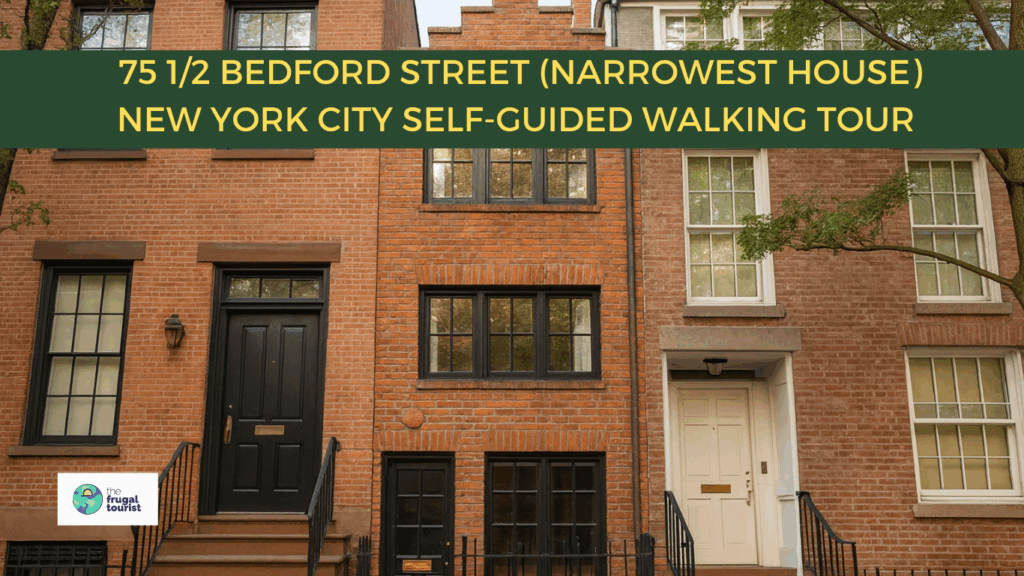
- Why it’s worth it: At just 9.5 feet wide, this is the narrowest house in the city. Despite its size, it has been home to massive celebrities, including Cary Grant and poet Edna St. Vincent Millay. It’s a quick but essential photo op for any West Village tour.
- The History: Constructed in 1873 in a former carriage alley, this tiny home has hosted massive talent, including poet Edna St. Vincent Millay and a young Cary Grant.
- Fun Fact: Don’t let the size fool you. Inside, the space shrinks to just over 8 feet wide yet manages to fit a spiral staircase, four fireplaces, and access to a hidden shared garden!
8. Stonewall National Monument
From the Narrowest House, head back to the Friends corner and turn right onto Grove Street.
Walk down Grove Street until it ends at 7th Avenue South.
The fenced-in Christopher Park will be directly in front of you.
This is the birthplace of the modern LGBTQ+ rights movement, marking the site of the 1969 Stonewall Uprising.

The History:
In the early hours of June 28, 1969, patrons of the Stonewall Inn (a gay bar) fought back against a police raid, sparking six days of protests that ignited the global fight for LGBTQ+ rights.
In 2016, President Obama designated the area a National Monument—the first ever dedicated to LGBTQ+ history.
New Visitor Center:
Opened in 2024, the Visitor Center is a must-visit.
It is located next door to the bar at 51 Christopher Street.
It’s an immersive educational space where you can listen to oral histories, view artifacts from the riots, and even stand in the very spot where the original bar stood in 1969.
Christopher Park Sculptures
Directly outside the Visitor Center, you’ll see George Segal’s white plaster sculptures titled “Gay Liberation.”
Installed in 1992, the statues depict same-sex couples in tender, everyday moments.
- Insider Tip: After learning the history at the Visitor Center, step into the actual Stonewall Inn next door for a drink. It’s still a functioning bar and a living piece of history.
- Fun Fact: On the sidewalk in front of Village Cigars (Christopher St & 7th Ave S), look for the Hess Triangle. It is a tiny mosaic tile that reads “Property of the Hess Estate…” It represents the smallest plot of private land in NYC—a result of a petty 1910s land dispute that has been preserved as a symbol of New York grit!
Worth the Detour: Gay Street
- Where: Walk two blocks east on Christopher St and turn right onto Gay Street.
- Why it’s worth it: This is arguably the most photogenic street in the Village. Unlike the rest of the grid, this tiny, curved street bends perfectly to show off a row of pristine Federal-style houses.
- The History: Despite the name, the street was likely named after an early landowner, not the LGBTQ+ movement (though it fits perfectly now!). It has appeared in countless movies and was once home to the mayor of New York, Jimmy Walker, who allegedly used it as a hideaway for his mistress.
9. Jefferson Market Library & Garden
From Gay Street, turn left onto Waverly Place and walk to 6th Avenue.
Turn left (north) on 6th Avenue and walk two blocks up to West 10th Street.
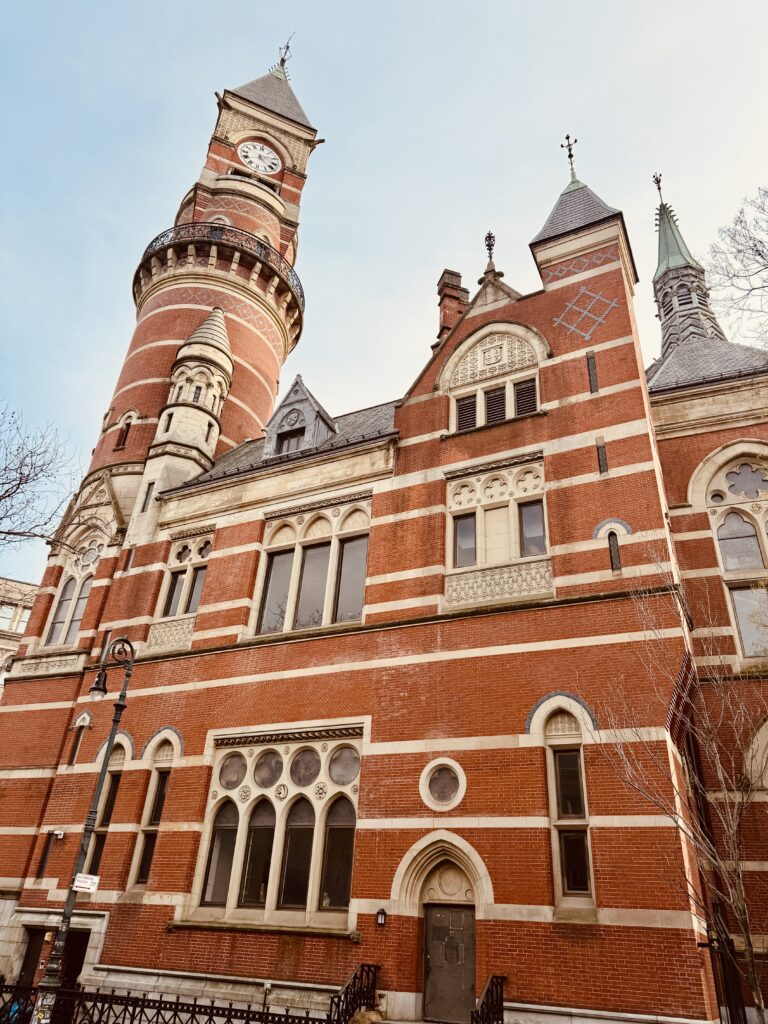
You can’t miss the massive clock tower on your left.
The Jefferson Market Library is one of my absolute favorite stops on this walk.
To make sure you can get inside, please check the operating schedule below before you visit.
| Day | Hours |
|---|---|
| Monday | 10am-8pm |
| Tuesday | 10am-8pm |
| Wednesday | 10am-8pm |
| Thursday | 10am-8pm |
| Friday | 10am-5pm |
| Saturday | 10am-5pm |
| Sunday | 1pm-5pm |
The Architecture:
Built in 1877, this Victorian Gothic masterpiece looks more like a castle or a church than a library. With its turrets, stained glass, and massive clock tower, it is often voted one of the most beautiful buildings in the United States.
The History:
It has lived many lives! It started as a courthouse (where Mae West was once put on trial on morals charges) and later became a women’s prison. By the 1960s, it was abandoned and set for demolition, but the local community, led by prominent Village residents, rallied to save it and convert it into the public library you see today.
The Garden:
Right next to the library is the Jefferson Market Garden. This stunning, flower-filled oasis stands on the site of the former women’s prison. It is a peaceful spot to sit and smell the roses (literally) before heading to our final stop.
Insider Tip: Go inside! It is a public NYPL branch, so it’s free to enter. The spiral staircase and the view of the village from the reading room are spectacular. Don’t forget to check out the exhibits in the basement.
Worth the Detour: Patchin Place (The Literary Cul-de-Sac)
- Where: Directly across the street from the Jefferson Market Library on West 10th Street (between 6th Ave & Greenwich Ave).
- The Detour: Look for the black iron gates on West 10th Street (between 6th Ave & Greenwich Ave). This is Patchin Place, a tiny, gated cul-de-sac.
- Why it’s worth it: It’s a quiet slice of history that famously housed writers like E.E. Cummings. The street still features one of the city’s original 19th-century gas street lamps (now electric), adding to its moody, historic atmosphere.
- Photo Tip: If you stand inside the gate and look back out toward the street, you can frame a perfect shot of the Jefferson Market Library clock tower rising above the historic row houses.
10. Washington Square Park
Leaving the library, head south on 6th Avenue (Avenue of the Americas) for two short blocks.
Turn left onto Waverly Place, and you will see the park opening up right ahead of you.
We finish our 3-mile journey at the iconic Washington Square Park.
Walk through the famous marble arch and find a spot near the fountain.
This is the heart of NYU’s campus and a gathering place for musicians, chess players, and artists. You made it!

Hidden History:
Before it was a park, this land was a potter’s field (a public burial ground).
It’s estimated that over 20,000 bodies still lie beneath the grass, many victims of yellow fever epidemics in the early 1800s.
It was also a site for public executions.
The “Hangman’s Elm” in the northwest corner is the oldest tree in Manhattan and a somber witness to that past.
The Arch:
The marble arch was built in 1892 to celebrate the centennial of George Washington’s inauguration.
It replaced an earlier temporary arch made of wood and plaster that was so popular the city made it permanent.
Folk Music Legacy:
In the 1950s and 60s, this park was ground zero for the “Beatnik Riot” and the folk music revival.
Bob Dylan and countless others strummed guitars right here by the fountain, a tradition that continues with the buskers you see today.
Hidden Gems
- Chess Plaza (Southwest Corner): Home to some of the city’s fiercest chess hustlers.
- Hangman’s Elm (Northwest Corner): Manhattan’s oldest living tree, with rumored (but unproven) ties to colonial-era executions.
- The Fifth Avenue View: Stand at the arch, look north — the framing of the Empire State Building is picture-perfect.
Worth the Detour: Washington Mews (The European Street)
- Where: Right next to our final stop, Washington Square Park.
- The Detour: Before you leave the park, walk half a block north up Fifth Avenue and turn right onto Washington Mews.
- Why it’s worth it: This private cobblestone street was once a row of horse stables for wealthy families. Today, the converted homes (owned by NYU) create one of the most picturesque, European-feeling streets in Manhattan. It is the perfect quiet ending to your tour.
Worth the Detour: Joe’s Pizza (The Classic Slice)
- Why it’s worth it: You can’t leave the Village without a slice. This is a true New York institution (famous from the Spider-Man movies). It’s a no-frills, standing-room-only spot that serves the quintessential NYC slice—thin, crispy, and perfect. If the line looks long, don’t worry; it moves fast!
- Where: 7 Carmine Street (Just off 6th Avenue).
- The Detour: From the southwest corner of Washington Square Park, it is just a 2-minute walk. Head south on 6th Ave and turn right on Carmine St.
Coffee & Snacks: Fuel for the Walk
You will burn plenty of calories on this walk, so here are the best places to recharge with a caffeine kick or a legendary NYC treat.
- Hudson Yards: Before you start climbing The Vessel, grab a coffee or authentic Spanish churros at Mercado Little Spain (inside the mall, street level). It’s a vibrant food hall created by celebrity chef José Andrés.
- Chelsea Market: This is snack heaven. For something sweet and easy to eat while walking, try the mini donuts at Doughnuttery or the tahini soft serve at Seed + Mill.
- Pier 57 (Market 57): If Chelsea Market is too packed, head here. This food hall is curated by the James Beard Foundation, featuring a rotating selection of high-quality kiosks from diverse chefs. It’s perfect for grabbing a unique bite to eat on the rooftop park.
- Meatpacking District (Near Little Island): Just steps from the southern end of the High Line is the Starbucks Reserve Roastery. Even if you don’t drink coffee, it’s worth popping in to see the massive copper roasting casks and unique interior—it’s like a coffee theme park!
- Washington Square Park: If you need a rest at the end of the tour, head to Caffe Reggio on MacDougal Street (just a block south of the park). It claims to have introduced the cappuccino to America and feels like stepping back in time.
Photo Op Checklist: The Best Instagram Spots
This route is packed with visual stunning moments.
Keep your camera ready for these specific shots to capture the essence of the walk.
- The Vessel (Hudson Yards): Don’t just take a photo of the exterior. Stand in the very center of the base and look straight up to capture the “sci-fi kaleidoscope” effect against the sky.
- The High Line (10th Ave Square): At 17th Street, sit on the wooden steps and take a photo through the massive glass window overlooking 10th Avenue—it frames the traffic like a movie screen.
- The High Line (26th St Spur): Look for the empty metal frame that juts out over the street. It is literally designed to frame the city grid for a perfect portrait.
- The Whitney Museum Terraces: If you go inside, the outdoor terraces offer one of the few vantage points where you can see the Empire State Building and One World Trade Center in a single panoramic sweep.
- The “Friends” Corner (90 Bedford St): While the street corner is famous, zoom in on the fire escape above “The Little Owl” restaurant for the authentic Friends establishing shot vibe.
- The Narrowest House (75 1/2 Bedford St): It’s easy to miss! Snap a photo of the Dutch-gabled entrance to capture this 9.5-foot-wide architectural oddity.
- Washington Square Arch: Stand south of the fountain and look through the marble Arch. If you align it correctly, you can frame the Empire State Building perfectly inside the archway.
Practical Logistics & Extensions
How to Get to Hudson Yards
To start this tour, your goal is Hudson Yards.
- Subway: Take the 7 Train to the 34th Street-Hudson Yards station. It’s the last stop, so you can’t miss it.
- Bus: The M34-SBS crosstown bus also drops you right there.
- Citibike: If you need to head back to Hudson Yards after the walk, consider grabbing a Citibike near Washington Square Park. You can ride the protected bike path along the Hudson River Greenway all the way back to 34th Street in about 20 minutes.
Extending Your Adventure
Not tired yet?
From Washington Square Park, you have great options:
- Head South: Walk into SoHo for world-class shopping and cast-iron architecture.
- Head East: Wander into the East Village for gritty rock-n-roll history and amazing vintage stores.
Preparing for Your NYC Walking Tour
Since this is all about health and enjoying the walk, gear matters!
- The Shoes: This is non-negotiable. Wear your most comfortable walking shoes or sneakers. We are navigating concrete, stairs, and cobblestones. Your feet (and back) will thank you.
- Hydration: Carry a refillable water bottle. There are fountains at Chelsea Market and Washington Square Park.
- Clothing:
- Summer: Light, breathable fabrics. It gets humid!
- Spring/Fall: Layers are key. A light jacket you can tie around your waist is perfect.
- Winter: A heavy coat, scarf, and gloves are a must. The wind off the Hudson River on the High Line can be biting.
Final Thoughts
For me, this walk was a celebration of resilience.
Post-surgery, every step feels like a victory, and the diverse streets of Chelsea, the Meatpacking District, and the West Village offer the perfect backdrop for that journey.
Whether you are healing from a setback or just looking to escape the chaos of Manhattan, this itinerary invites you to slow down.
Don’t worry about ticking off every tourist box; just enjoy the walk.
Your heart (and your camera roll) will thank you!
Safe travels!
ADVERTISER DISCLOSURE: The Frugal Tourist is part of an affiliate sales network and receives compensation for sending traffic to partner sites, such as MileValue.com. This compensation may impact how and where links appear on this site. This site does not include all financial companies or all available financial offers. Terms apply to American Express benefits and offers. Enrollment may be required for select American Express benefits and offers. Visit americanexpress.com to learn more. All information about the American Express Schwab Platinum has been collected independently by The Frugal Tourist.
EDITORIAL DISCLOSURE: Opinions, reviews, analyses & recommendations are the author’s alone and have not been reviewed, endorsed, or approved by any of these entities.
USER-GENERATED CONTENT DISCLOSURE: The comments section below is not provided or commissioned by the bank advertiser. Responses have not been reviewed, approved, or otherwise endorsed by the bank advertiser. It is not the bank advertiser’s responsibility to ensure all questions are answered.