
ADVERTISER DISCLOSURE: The Frugal Tourist is part of an affiliate sales network and receives compensation for sending traffic to partner sites, such as MileValue.com. This compensation may impact how and where links appear on this site. This site does not include all financial companies or all available financial offers. Terms apply to American Express benefits and offers. Enrollment may be required for select American Express benefits and offers. Visit americanexpress.com to learn more. All information about the American Express Schwab Platinum has been collected independently by The Frugal Tourist.
EDITORIAL DISCLOSURE: Opinions, reviews, analyses & recommendations are the author’s alone and have not been reviewed, endorsed, or approved by any of these entities.
Welcome to this amazing concrete jungle – The Big Apple!
If you’ve been following my journey, you know that since my heart bypass surgery, my travel philosophy has shifted.
While I still obsess over maximizing credit card points to secure business-class seats (because recovering in luxury is just common sense), I’ve traded the tour buses for sneakers.
Walking is my medicine.
It is the cheapest, most effective way to regain strength, and in a city like New York, it’s the only way to truly peel back the layers of history.
This is Part 1 of my “Walk Your Way to Health” series in NYC.
We are tackling the “Old New York“—the historic southern tip of Manhattan where the city began.
This walk is dense with history, relatively flat (great for easing into activity), and entirely free.
Why This Walk is Highly Recommended
This route is the perfect “starter pack” for New York City visitors.
It is flat, filled with sights, and completely free.
It is perfect for the budget traveler and the recovering patient alike.
You aren’t just accumulating steps; you are walking through the timeline of America.
| New York Walking Tour Part 1 (Battery Park to Wall Street) Stats |
|---|
| Total Distance: |
| Approximately 1.5 miles |
| Estimated Time: |
| 1.5 – 2 hours (depending on photo stops) |
| Step Count Goal: |
| ~3,500 steps |
Highlights of This 1.5-Mile Loop
- Iconic Sculptures: Snap photos with both the massive Charging Bull and the defiant Fearless Girl.
- Harbor Views: Enjoy the best free views of the Statue of Liberty from The Battery without paying for a ferry ticket.
- National Monuments: Explore Castle Clinton and stand on the steps of Federal Hall, where the Bill of Rights was adopted.
- New York’s Most Famous Street: Walk the canyon of Wall Street, the global symbol of finance and power.
- Financial Power: Marvel at the imposing façade of the New York Stock Exchange.
- A Founding Father: Pay your respects at the grave of Alexander Hamilton in the Trinity Churchyard.
- The Birth of NYC: Retrace the winding streets of New Amsterdam and explore the physical remnants of the original Dutch colony hidden beneath the modern city.
Where I Stayed on Points: Luxury for $0
Since this walk centers around Lower Manhattan, I wanted a base camp that was walkable to the start line but didn’t cost a fortune in cash.
NYC hotel rates are notorious for being sky-high, often costing a small fortune for a basic room.
My solution? My World of Hyatt points.
I split my time between two incredible properties right in the Financial District, paid for entirely with points earned from my credit cards, such as the Chase Sapphire Preferred® Credit Card:
- The Beekman, a Thompson Hotel: This place is an architectural masterpiece with a stunning nine-story atrium.
- Gild Hall, a Thompson Hotel: A cozy, stylish, and quieter option that offers incredible value for fewer points.
By strategically using points, I stayed in luxury properties for free.
This is the core of my philosophy: let the credit card companies pay for the bed so you can save your cash for experiences (or a really good post-walk meal).

Join Our Free Travel Miles & Points Facebook Group

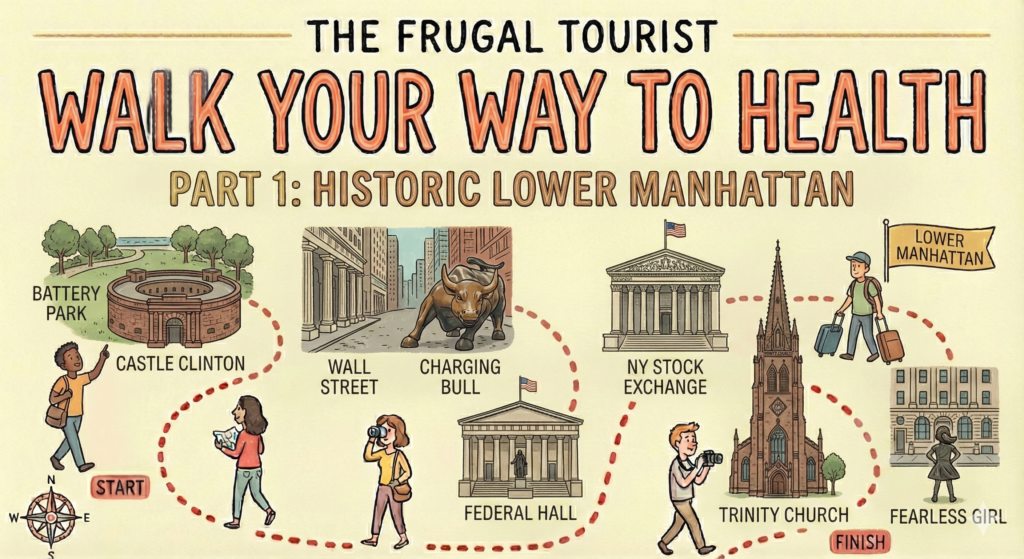
The Old New York Walking Tour Map
Feel free to download this map and share it with family and friends who are traveling to the Big Apple.
Best Time to Visit NYC for Walkers
Since this itinerary relies heavily on being outdoors, timing your visit is crucial.
Winter Warning: While hotel rates are lower in January and February, the wind chill on the Brooklyn Bridge can be brutal. If you walk in winter, thermal layers are non-negotiable.
The Sweet Spot (Spring & Fall): The months of April–May and September–October are ideal. The temperatures are crisp (perfect for keeping your heart rate steady), the humidity is low, and the foliage in the parks provides a beautiful backdrop.
Summer Caution: NYC in July and August can be stifling. The concrete radiates heat, and the humidity can be taxing on the body. If you visit then, walk early in the morning (before 9 AM) to beat the heat.
From Mana-Hatta to New Amsterdam: The Birth of NYC
Before the skyscrapers and the subways, Manhattan was a dense forest of hills and streams known as Mannahatta (“island of many hills”) to the Lenape people.
While we often think of New York as an English colony, its true foundation—and its unique personality—is distinctly Dutch.
The Business of Beaver Pelts
Unlike the Pilgrims in Massachusetts who came for religious freedom, the Dutch arrived in 1624 strictly for business.
Run by the Dutch West India Company, the colony of New Amsterdam wasn’t about prayer; it was about profit, specifically from the fur trade.
Because the focus was money, the Dutch didn’t care who you were or where you came from, as long as you could work.
This created a melting pot from the very beginning.
By the 1640s, it is estimated that 18 different languages were already being spoken on the streets of Lower Manhattan.
The “Purchase” and The Wall
Two major events defined the physical layout of the city we know today:
- The Deal (1626): Director-General Peter Minuit famously “bought” Manhattan from the Lenape for 60 guilders worth of goods. Note: This was likely a misunderstanding of cultures; the Lenape viewed this as a treaty to share the land, not a permanent sale.
- The Wall (1653): To protect the northern border of the city from attacks, the settlers built a fortified wooden wall. Today, we know the footprint of that barrier as Wall Street.
Enter Peter Stuyvesant
The colony was chaotic until the arrival of Peter Stuyvesant in 1647.
A peg-legged, authoritarian leader, Stuyvesant cleaned up the streets, restricted alcohol, and established law and order.
While he wasn’t popular, he turned a messy outpost into a functioning city.
The Bloodless Takeover: Becoming New York
By 1664, the English King Charles II wanted the prosperous harbor for himself.
He granted the land to his brother, the Duke of York, and sent four frigates to take it.
When the British ships aimed their cannons at the crumbling Fort Amsterdam, Stuyvesant wanted to fight.
However, the diverse citizens of New Amsterdam—more interested in protecting their homes than dying for the Dutch West India Company—refused.
They petitioned Stuyvesant to surrender.
On September 8, 1664, the city was handed over without a single shot fired.
New Amsterdam was instantly renamed New York in honor of the Duke of York.
Travel Trivia: The Dutch DNA
Even though the British took over, the Dutch influence never left.
You can still see it in the names of the boroughs and streets:
The Bowery was the road to the Bouwerij (Farm).
Brooklyn comes from Breukelen.
Harlem comes from Haarlem.
Broadway was the Brede Weg (Broad Way).
How to Get to the Starting Point
Start Location: The Battery (formerly Battery Park).
By Subway:
- 1 Train (Red): Take it to South Ferry. This is the best option because the station exit is literally inside the park!
- 4 or 5 Train (Green): Take it to Bowling Green. You will come out right across the street from the park entrance.
- R or W Train (Yellow): Take it to Whitehall St. It is just a short 2-minute walk to the water.
Pro-Tip: NYC subways frequently undergo maintenance on weekends. Always check the MTA website or use a map app for real-time service changes before you head out.
Restroom: Where to Go for Free
Finding a bathroom in NYC can be a challenge. Here are the best free spots on this specific route:
- Staten Island Ferry Terminal: (Start of Tour) Before you start walking, head to the ferry terminal. It has large, clean public restrooms that are free and reliable.
- The Battery Oval: (Stop 1) There is a standalone circular restroom building located near the large lawn (the “Battery Oval”) inside the park.
- Federal Hall: (Stop 8) This museum at 26 Wall Street is free to enter and has clean public restrooms downstairs. It’s a perfect mid-tour break.
- Note: Most coffee shops in this area (like Starbucks) require a code or a purchase to use the restroom.
The “Old New York” Route: 10 Historic Stops
1. The Battery (Start Point)
Location: We begin at the absolute edge of the island.
The Battery is the city’s green welcome mat, offering sweeping views of the harbor where the Atlantic meets the Hudson.
As you walk along the promenade, take a deep breath of salt air; this is where millions of immigrants first gazed upon their new home.
It is a perfect warm-up spot to stretch your legs before hitting the pavement.

- Insider Tip: Save your money and skip the long lines for the paid Statue of Liberty tourist boats if you are just looking for a photo. Head straight to the waterfront promenade for a perfect, free view of Lady Liberty and Ellis Island. For the best shots, try to visit in the morning when the sun illuminates the statue rather than casting it in shadow. Before moving on, take a moment to see the whimsical SeaGlass Carousel or the poignant American Merchant Mariners’ Memorial, which honors the merchant seamen lost during WWII.
| Worth the Detour: Free Ferry Ride to Staten Island |
|---|
| Taking the Staten Island Ferry is one of the best “hacks” for visiting New York City because it gives you million-dollar views for absolutely zero cost. Instead of paying for an expensive boat tour, you can hop on this free commuter ferry to see the Statue of Liberty and the stunning Manhattan skyline right from the water. For the best experience, try to avoid the morning and evening rush hours when commuters pack the boat, and grab a spot on the right side (starboard) of the ferry departing Manhattan for the perfect photo op of Lady Liberty. It runs 24/7, so you can even ride it at sunset or night to see the city lights sparkle, making it a must-do for any traveler on a budget. Ignore the aggressive ticket sellers outside the terminal. They target tourists. The Staten Island Ferry is always free and requires no ticket. When the ferry docks in Staten Island, everyone must exit. If you want to go straight back to Manhattan, follow the crowd making a U-turn through the terminal to the departure gates for the next boat back.You will likely have to wait 20–30 minutes for the next departure, so make sure to factor that into your schedule. |
2. Castle Clinton National Monument
Location: Located inside The Battery, this sandstone fort has served as a fortress, an opera house, and an aquarium over the centuries.
Historically, it was America’s first immigration station (predating Ellis Island), processing over 8 million people.
Walking through its open-air walls gives you a tangible sense of the city’s defensive past without costing a dime.
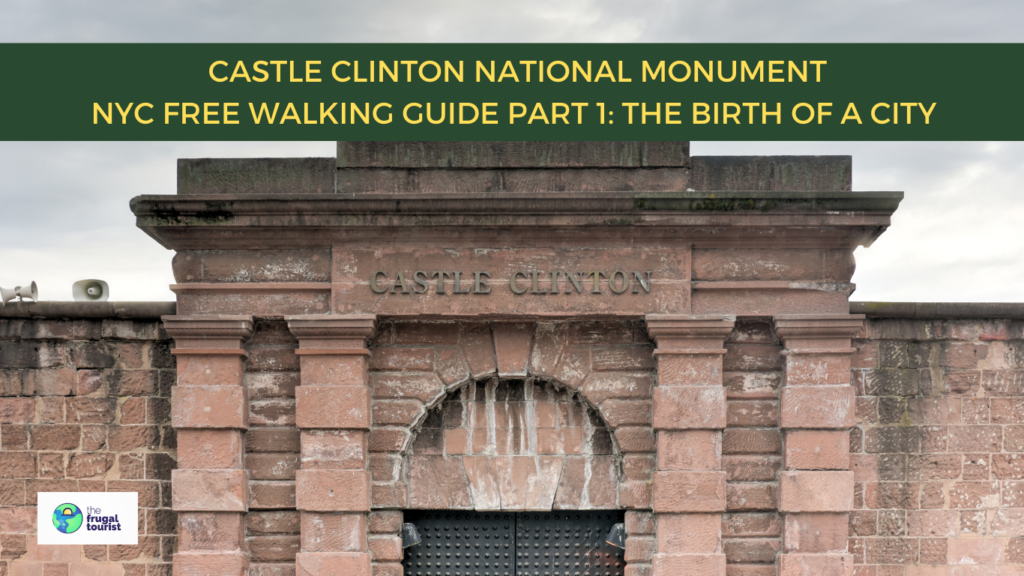
- Insider Tip: Entrance is free! It currently houses the ticket center for Statue of Liberty cruises. If you plan to visit the Statue of Liberty and Ellis Island on the same day, make sure to start early. Even if you don’t plan to buy tickets, walk inside the Castle Clinton to see the historical dioramas showing how Manhattan’s shoreline has expanded over time.
| Worth the Detour: Netherlands Monument |
|---|
| The Site of the “Purchase”: Peter Minuit Plaza: Before we head out to our third stop, let’s visit the location of the Netherland Monument, which honors early Dutch settlers. Located at the intersection of State Street and Battery Place in Battery Park, New York City, this flagpole monument marks the approximate location where Peter Minuit stood when he “purchased” Manhattan from the Lenape. It features a map of New Amsterdam based on the famous Castello Plan of 1660. |
3. Bowling Green Park & The National Museum of the American Indian
Location: Walk north out of the Battery to the first triangular park you see.
This is New York City’s oldest public park, established in 1733.
It sits directly across from the site of the ‘purchase’ we just visited at the Netherlands Monument.
The rough iron fence surrounding the park is the original from 1771.
Right across from the park is The National Museum of the American Indian, housed inside the historic Alexander Hamilton U.S. Custom House.
This building sits directly on the footprint of Fort Amsterdam—the military headquarters where New York was born.
It is free to enter the museum.
However, If you’re pressed for time, you can still enjoy a quick highlight: the four massive marble sculptures flanking the entrance, each representing one of the four continents..
The table below summarizes each statue’s significance.
| 4 Continents | What to look for |
|---|---|
| America | Spot the Native American figure peering over the central woman’s shoulder. While the artist meant this to show the past “giving way,” today it reminds us of the Indigenous foundation of the continent. Also, look for the “wheel of progress” and the sheaf of corn on her lap, symbolizing the nation’s rapid growth and abundance. |
| Asia | Look for the three human skulls at the base of her throne, which the artist used to symbolize the continent’s deep and tragic history. The central figure sits in meditation with a small Buddha idol, representing the birthplace of major religions, while a tiger sits beside her to symbolize the region’s wild power. |
| Europe | Find the prow of a ship carved into the side of the throne, a nod to the navies that spread European power globally. The figure sits like a queen wearing a crown, with her arm resting on a globe and a large book, symbolizing the “Old World” claim to established law, history, and civilization. |
| Africa | Notice that the woman is asleep, leaning her head on her arm. In the early 1900s, this represented the Western view of Africa as a continent with “awakening” potential. She is flanked by a lion and a Sphinx, hinting at her ancient civilizations and the mystery that surrounded the continent at the time. |
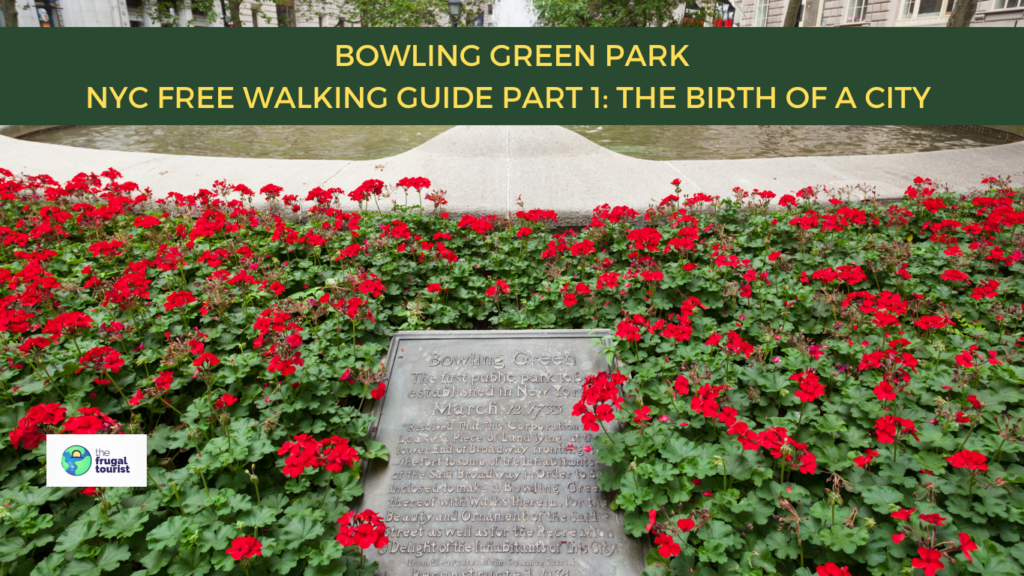
- Bowling Green Insider Tip: This is a great spot to sit for a minute if you are pacing yourself post-recovery. The fountain in the center is iconic, and the history literally surrounds you.
- Alexander Hamilton U.S. Custom House Insider Tip: Don’t just look at the museum exhibits; look up. The building features a stunning oval rotunda with a 140-ton skylight and WPA murals that are a hidden masterpiece of New York architecture.
4. The Charging Bull
Location: Just north of Bowling Green on the cobblestones.
You cannot miss the crowds surrounding Arturo Di Modica’s bronze beast.
This 7,000-pound sculpture was originally a guerrilla art installation dropped here in 1989 following the stock market crash.
It symbolizes aggressive financial optimism and prosperity, making it a must-visit for anyone in the Financial District.
Most visits to the bull involve two specific photo opportunities that have become local superstitions:
- Rubbing the Nose & Horns: Visitors often rub the bull’s nose and horns, which are polished to a bright gold sheen from millions of hands touching them. This is believed to bring general good luck.
- Rubbing the Testicles: It is a very popular (and specific) tradition for tourists to walk to the back of the bull and rub its testicles. According to urban legend, doing so brings financial luck and wealth. You will often see a line of people waiting to take this specific photo.
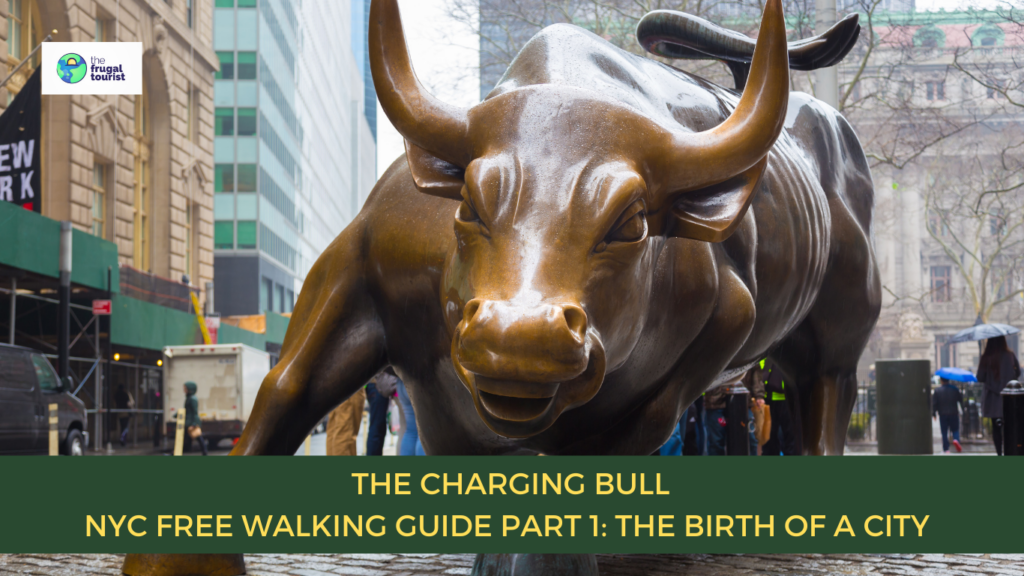
- Insider Tip: The line to take a photo with the front of the bull can be 45 minutes long. If you just want a selfie to prove you were there, stand to the side. It’s safer, faster, and you still get the massive bronze muscles in the shot. Alternatively, if you want a photo without strangers in the background, try visiting very early in the morning (before 8:00 AM).
5. The Canyon of Heroes (Broadway)
Location: Walk North up Broadway from the Bull.
As you walk up Broadway, look down at the sidewalk to see the “Canyon of Heroes.”
Embedded in the pavement are black granite strips marking every ticker-tape parade held in NYC.
While Hollywood has the Walk of Fame, this is NYC’s version, honoring everyone from Amelia Earhart and Winston Churchill to the Apollo 11 astronauts.
It is often overlooked by tourists rushing to Wall Street, but it is a timeline of American history beneath your feet.
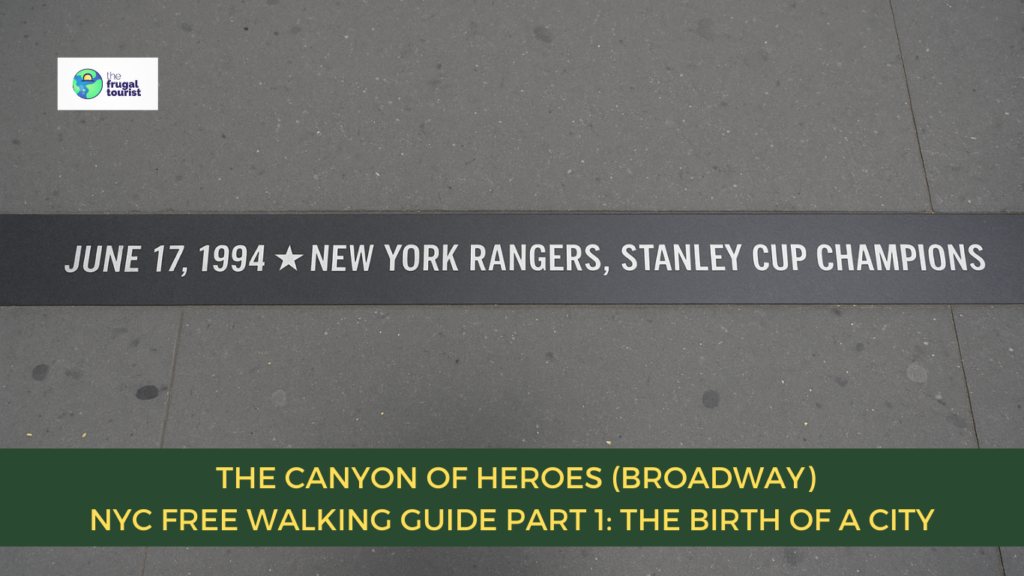
- Insider Tip: Challenge yourself to find the markers for simpler times, like the parade for the “glorious return of the 369th Infantry” or foreign dignitaries. It turns a simple walk into a scavenger hunt.
6. Trinity Church
Location: Continue north on Broadway to Wall Street. The church will be on your left.
At the intersection of Broadway and Wall Street stands this Gothic Revival masterpiece.
When it was built, its spire was the tallest structure in the city, a beacon for ships entering the harbor.
The churchyard is the final resting place of several signatories of the Declaration of Independence and the Constitution.
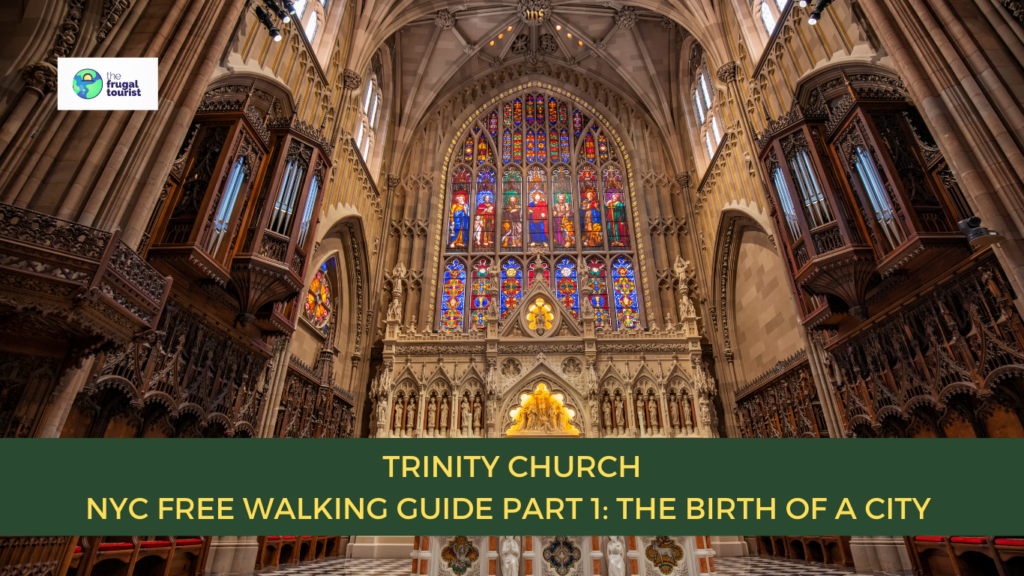
- Insider Tip: Hamilton fans, this is your stop. Alexander Hamilton’s grave is located in the cemetery on the south side of the church (visible from the fence). It is usually decorated with coins and flowers. If the churchyard gates are locked (usually after 4–5 PM), you can still see Hamilton’s white marble pyramid grave clearly from the sidewalk on Rector Street/Trinity Place.
7. Wall Street
Location: Cross the street to find NYC’s most famous avenue – Wall Street.
This narrow canyon is the symbolic heart of global finance.
As we learned in the intro, the name comes from the wooden defense wall built here in 1653.
Today, that barrier has been replaced by massive skyscrapers
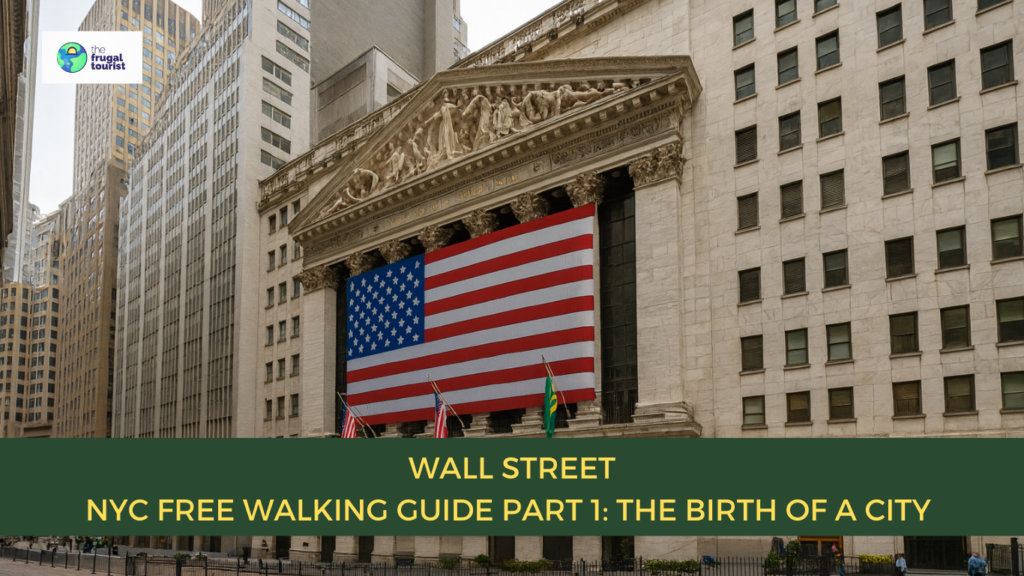
- Insider Tip: Look up! The architecture here is stunning, but most people are too busy dodging suits to notice. The intricate stonework on the upper floors is a reminder of the Gilded Age wealth.
- Note: Wall Street is a high-security zone. Occasionally, police barricades may restrict direct access to the front of the NYSE or Federal Hall. If that happens, you can usually still get a great view from the corner of Broad Street.
8. Federal Hall National Memorial
Location: 26 Wall Street.
Standing on the steps of this building is a bronze George Washington, marking the exact spot where he took the oath of office as the first President of the United States.
This site was home to the first Capitol building of the U.S. and is where the Bill of Rights was adopted.
Modeled after the Parthenon in Athens, this site is arguably one of the most historically significant corners in America.
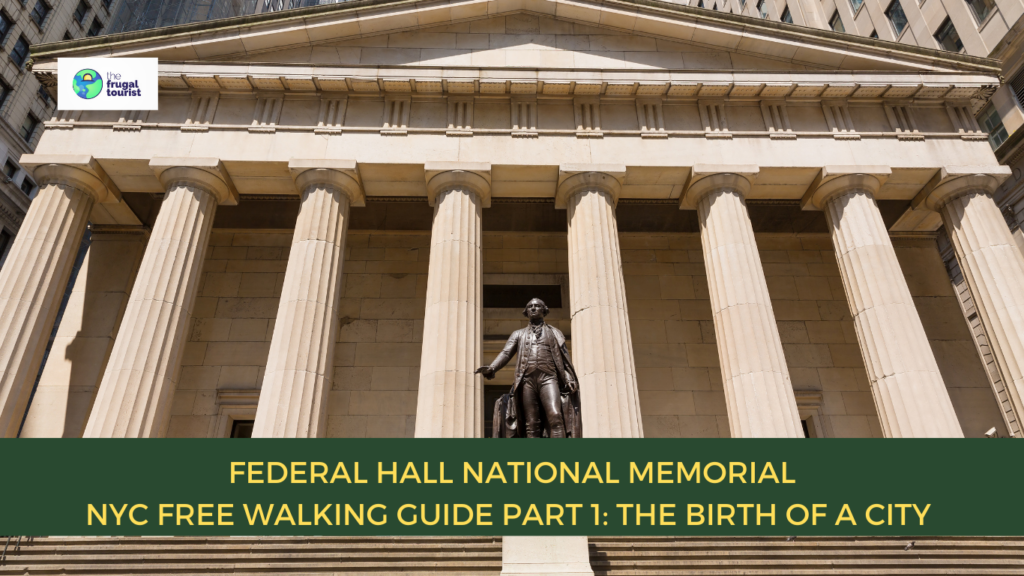
- Insider Tip: The steps of Federal Hall are a great place to people-watch. Entrance to the museum inside is free and offers clean restrooms. Once inside, make a beeline for the bible George Washington used during his inauguration.
- Note: Federal Hall is typically open Monday–Friday, 9 AM–5 PM, and is closed on weekends. If you visit on a Saturday or Sunday, you can still admire the statue outside, but you won’t be able to use the restrooms or see the museum.
9. The New York Stock Exchange (NYSE)
Location: Diagonally across from the Federal Hall.
You can’t go inside, but the façade of the NYSE, draped in a massive American flag, is an image of power.
Known as the “Big Board,” this is the world’s largest stock exchange.
The heavy security and barricades are a stark reminder of the post-9/11 world, but the building’s neoclassical columns remain an enduring symbol of capitalism.
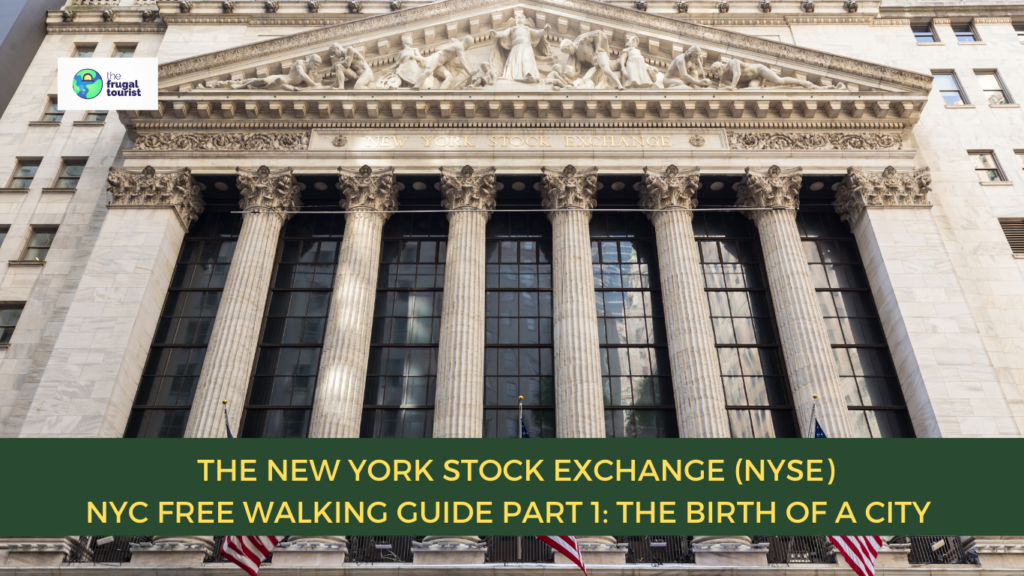
- Insider Tips: For the best photo, stand on the steps of Federal Hall. You get the Washington statue in the foreground and the NYSE in the background—a perfect framing of political and financial history.
10. The Fearless Girl
Location: Currently located directly opposite the NYSE.
Originally facing the Charging Bull, the “Fearless Girl” statue was moved to stand directly opposite the Stock Exchange.
With hands on her hips and chin up, she represents female empowerment and the push for gender diversity in corporate leadership.
It is a powerful, modern counterpoint to the area’s old-school history.
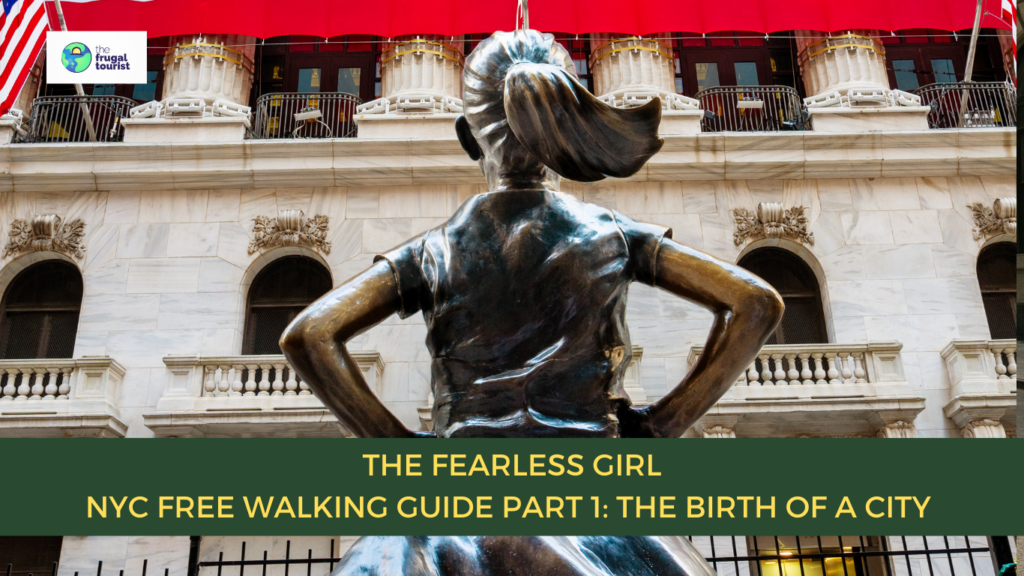
- Insider Tip: The plaque near her feet reads “Know the power of women in leadership.” It’s a quick stop, but a poignant one before we wrap up this leg of the tour.
Ready for the “Hidden” History?
Congratulations!
You have just completed the main loop and seen the icons of the Financial District.
Most tourists stop here, but you aren’t most tourists.
If your legs are up for another 20 minutes of walking, the real treasure hunt begins now.
Hidden just around the corner, beneath the shadows of the modern skyscrapers, lies the actual footprint of New Amsterdam.
Follow me into the next section to walk the ancient Dutch street grid and see the ruins that lie beneath the city.
Additional Tour: The Heart of New Amsterdam
New York City began in 1624 not as a giant metropolis, but as a small Dutch trading post called New Amsterdam, clustered entirely at the southern tip of Manhattan to control the river trade.
This walking tour navigates the original 17th-century street grid, allowing you to walk the exact paths where the first settlers lived, dug their canals, and built their defensive walls.
It is the only place in the city where you can physically retrace the footprint of New York’s birth beneath the shadow of modern skyscrapers.
The New Amsterdam Walking Tour Map
Feel free to download and share this free map.
The New Amsterdam Walking Route
1. Broad Street
From the Fearless Girl sculpture, face the New York Stock Exchange, then turn around to head south (away from Wall Street).
Walk straight down Broad Street.
As you walk this wide avenue, imagine a canal flowing beneath your feet.
The Dutch dug the “Heere Gracht” here to move goods by boat, just like in Amsterdam.
It was eventually filled in, but the street remains unusually wide today because of that buried history.
Our next stop will be at the corner of Broad Street and Pearl Street.
Pearl Street marks the original coast of Manhattan; everything you see east of this street is actually built on landfill used to expand the city.
2. Fraunces Tavern
Location: 54 Pearl Street. This is the location of the original shoreline. When the Dutch founded the city, this building would have been right on the water. It reminds us that New York started as a tiny port town where the sea was the lifeblood of the economy.
Fraunces Tavern is most famous as the site where George Washington bid an emotional farewell to his officers in 1783, signaling the official end of the Revolutionary War.
This moment formally marked the transition from a military revolution to a peaceful civilian government.
Before that peace, the tavern was a hotbed for spies and the “Sons of Liberty,” where the owner secretly gathered intelligence on British troops to help the American cause.
After independence, the building essentially served as the country’s first “Pentagon,” housing the early Departments of War and Foreign Affairs.
It was also the site of the historic “Birch Trials,” where officials reviewed cases to ensure that thousands of formerly enslaved people who escaped to British lines could legally keep their freedom.
3. Remnants of Lovelace Tavern
Location: 85 Broad Street (look down at the sidewalk).
This stop is unique because you’re actually looking under the street at the foundations of a tavern built in 1670 and owned by the colony’s British Governor.
After burning down in 1706, the ruins were lost until 1979, when construction workers rediscovered the original walls and a treasure trove of artifacts, including wine bottles and pipes.
Today, you can stand on the sidewalk and peer through a glass window into the past to see the actual brick and stone remnants of the basement.
It’s a literal window into the city’s colonial life, preserved right beneath your feet.
4. Stone Street Historic District
Location: Walk around the corner to the cobblestone street.
Originally known as Hoogh Straet (High Street), it was the first street in the city to be paved with cobblestones (hence the name) because the Dutch brewers complained about their beer wagons getting stuck in the mud.
The residents paid for the cobblestones themselves, marking the moment the settlers started investing in permanent infrastructure.
It is one of the few places in NYC that retains the narrow, winding feel of the 1600s.
5. 57 Stone Street (The Stadt Huys)
Location: 57 Stone St.
You are standing on the site of the first City Hall (Stadt Huys), built in 1653.
This is where the colony received its first municipal government, granting citizens their first legal rights and local laws distinct from the trading company that owned them.
6. The First Synagogue (Mill Street)
Location: 26 South William Street (formerly Mill Street).
You are standing at the site of the very first synagogue built in North America, which opened its doors here in 1730.
When the first Jewish refugees arrived in 1654, Governor Peter Stuyvesant actually tried to kick them out, but the Dutch West India Company overruled him and ordered that they be allowed to stay and trade.
This decision was a major turning point, establishing the religious tolerance that eventually defined New York.
While the original building is gone, standing here connects you to the moment the city began to open its doors to people of all faiths.
7. Hanover Square
Location: The triangular plaza at the end of Stone Street.
In the British era, this became the city’s “Printer’s Row” and retail hub.
It was here that many of the newspapers and pamphlets fueling the American Revolution were published, transforming the city into a center of communication and ideas.
8. Corner of Pearl & Wall Streets
Location: Walk north to the intersection of Pearl and Wall.
This spot marks the city limits of New Amsterdam.
As mentioned in Part 1 of this walk, the Dutch built a defensive wooden wall here in 1653 to protect the colony.
Standing here, you can see how compact the original city was—everything north of this street was once just wilderness.
| Trace the Actual “Wall” |
|---|
| Look down at the pavement at the corner of Wall Street and Pearl Street.. You will see a line of wooden block pavers embedded in the street. These markers trace the exact line of the original wooden defense wall built in 1653. Standing here puts you right on the edge of the old colony. |
9. The Wall Street Slave Market
Location: Walk one short block east to the corner of Wall and Water Streets
While Wall Street is famous for finance, it has a darker history.
This intersection was the site of the city’s official Slave Market, which operated from 1711 to 1762.
Enslaved people, who made up nearly 20% of the population, were bought and sold here to build the very streets, walls, and forts you have just walked.
A small marker here acknowledges their vital, often overlooked, contribution to building New York.
10. Elevated Acre
Location: 55 Water Street
We end our tour with a literal hidden gem.
From the street, 55 Water Street looks like just another boring office building.
But look for the “hidden” escalator tucked behind the building’s facade.
Ride it up to discover the Elevated Acre—a secret one-acre garden floating 30 feet above the city!
After walking the cramped, winding streets of 1600s New Amsterdam, this wide-open space brings you back to modern New York.
It’s quiet, green, and usually empty of crowds.
| Don’t Miss the View |
|---|
| Walk to the railing for a stunning panoramic view of the East River and the Brooklyn Bridge. The second installment of this NYC Walking Tour Series will take you across that bridge. Join me! |
Frugal Foodie Reward
You just crushed two walking tours in one day!
You deserve a treat.
Picnic Pro-Tip: If you packed a sandwich, this is the best free lunch spot in Lower Manhattan.
Grab a bench, rest your feet, and enjoy the million-dollar view for free.
Pizza with a View: Located just downstairs/around the corner from the Acre’s entrance is Patsy’s Pizzeria.
Grab a slice to go, then ride the escalator back up to eat on the lawn.
Must-Have Walking Essentials
As someone recovering from a major medical event, I cannot stress the importance of preparation for enjoying this walk enough.
- Footwear is King: Wear broken-in walking shoes with good arch support (Hokas are my go-to).
- Hydration Strategy: Bring a refillable water bottle. Dehydration increases heart rate and fatigue.
- Medical ID & Meds: Keep a small pill case if you have timed medications. I always wear my Medical ID bracelet.
- Compression Socks: Essential for blood flow if you are accumulating steps.
Final Thoughts
You have just walked through the birthplace of New York City and the financial center of the world.
That is 1.5+ miles of health-boosting activity and zero dollars spent on tickets.
Ready for more?
Grab a coffee on Broad Street, rest your legs for a moment, and click here for Part 2 of this NYC Walking Tour, where we head toward the World Trade Center and tackle the mighty Brooklyn Bridge.
Enjoy and safe travels!
Disclaimer: I am a travel enthusiast, not a doctor. Always consult with your cardiologist or healthcare provider before embarking on rigorous physical activity.
ADVERTISER DISCLOSURE: The Frugal Tourist is part of an affiliate sales network and receives compensation for sending traffic to partner sites, such as MileValue.com. This compensation may impact how and where links appear on this site. This site does not include all financial companies or all available financial offers. Terms apply to American Express benefits and offers. Enrollment may be required for select American Express benefits and offers. Visit americanexpress.com to learn more. All information about the American Express Schwab Platinum has been collected independently by The Frugal Tourist.
EDITORIAL DISCLOSURE: Opinions, reviews, analyses & recommendations are the author’s alone and have not been reviewed, endorsed, or approved by any of these entities.
USER-GENERATED CONTENT DISCLOSURE: The comments section below is not provided or commissioned by the bank advertiser. Responses have not been reviewed, approved, or otherwise endorsed by the bank advertiser. It is not the bank advertiser’s responsibility to ensure all questions are answered.
Trackbacks/Pingbacks